Are you a refugee in need of support? Get Help Here

Close Alert
/ The World Has Drastically Changed for Refugees—Here’s How RefugePoint Is Meeting the Moment
  • Updates & Insights

The World Has Drastically Changed for Refugees—Here’s How RefugePoint Is Meeting the Moment
All posts

The World Has Drastically Changed for Refugees—Here’s How RefugePoint Is Meeting the Moment
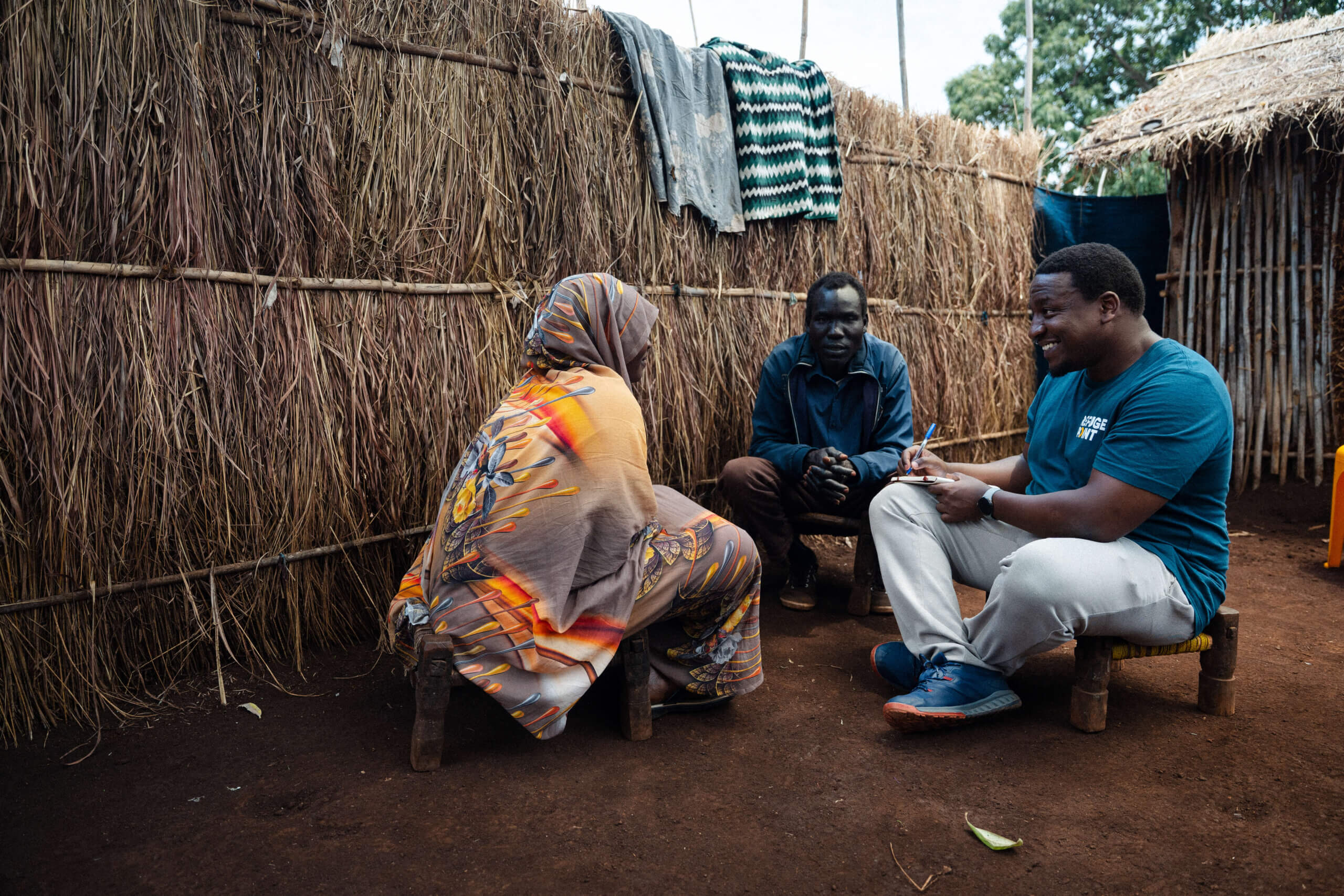
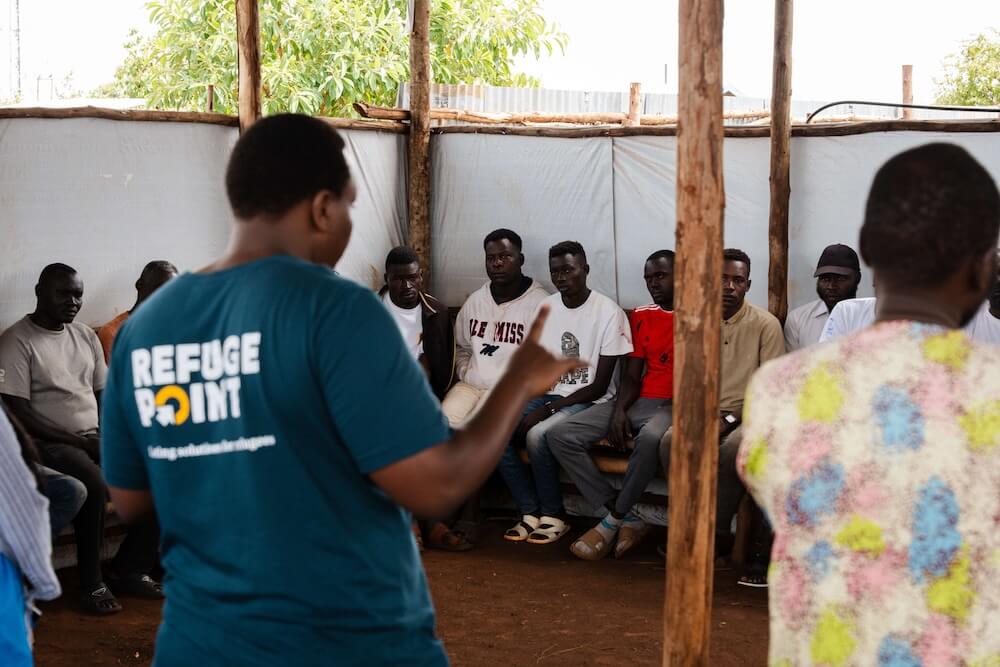
A RefugePoint Resettlement Expert presents at a community meeting in Ura Refugee Settlement, Ethiopia, informing community members of their options.  Photo: Chris Jensen, RefugePoint
Published on 6 January 2026
By Simar Singh , RefugePoint

Over the past year, the world has shifted in ways that have made life far more dangerous and uncertain for refugees. Support systems that once offered stability are eroding: global funding for refugee response has sharply declined, and tens of thousands of aid workers have been laid off. As a result, refugees are struggling to access basics like food, medical care, and protection—fueling growing desperation.

At the same time, opportunities to reach safety through legal migration pathways have diminished. In 2024, about 180,000 refugees relocated to safe, new countries, primarily through resettlement. In 2025, that number fell to fewer than 30,000 and is likely to further reduce in 2026. While some additional legal pathways to safety exist, they remain far too limited to meet the scale of need.

As we look toward 2026, it’s clear that the global landscape for refugees has fundamentally—and devastatingly—shifted. In a moment of such profound change, one might expect that RefugePoint’s strategy would need to shift just as dramatically. Yet the strength of our approach is that it was built to withstand this kind of uncertainty—designed to be flexible and adaptive—even as the refugee response system undergoes profound disruption. In times of upheaval, whether during COVID or in today’s rapidly changing context, we remain equipped to meet the moment. Here are three ways we are responding:


1. We are making sure refugees still have a place to turn in the midst of reduced aid and funding

In this changing climate, we are doubling down on our commitment to help refugees access lasting solutions. Through our direct service work—whether it’s self-reliance, resettlement, or other services—we maintain a critical direct touchpoint with refugees. In a time of decreasing services, decreasing funding, and widespread instability across the sector, we remain committed to doing what we can to support refugees through our various programs—and to connect them to pathways to safety that still exist.

While resettlement opportunities are becoming scarcer, it is crucial that refugees have access to other long-term solutions, such as self-reliance, which is one of our two core programmatic pillars. Self-reliance programming empowers refugees to establish sustainable livelihoods, meet their own essential needs, and rebuild their lives in their new communities. Unlike short-term emergency aid, self-reliance approaches focus on opening up opportunities for refugees to use their skills and strengths to care for their families and contribute to their communities. RefugePoint has been developing and scaling self-reliance opportunities for refugees for almost 20 years, and right now, self-reliance programming is more critical than ever before.

While many countries have closed their doors to refugees, there are others who are still welcoming refugees through resettlement and other pathways to safety, like family reunification (click here to watch a family reunite in Canada) and labor mobility.
 

How we advanced this work in 2025:
  • Through our Urban Refugee Protection Program in Nairobi, we expanded our livelihoods support to more people and increased our mental health and psychosocial support in response to growing needs.
  • In Nairobi and through our Experts deployed to UNHCR offices around the world, we assessed cases that had been referred to the US resettlement program to identify and advocate for the most vulnerable. Although there are few alternate options for resettlement at present, we were able to refer some of these cases to be considered for resettlement in other countries.


How we will continue to move this forward in 2026:
  • In 2026, our Urban Refugee Protection Program in Nairobi will pilot a new Livelihoods Strategy that is expected to generate stronger business outcomes for our clients while further strengthening their resilience and economic independence.
  • Our Family Reunification team will continue to support the families they are already working with to navigate the family reunification process, while also taking on new referrals and continuing outreach to raise refugees’ awareness of the family reunification pathway. We will also continue to co-lead the Global Family Reunification Network (FRUN), which aspires to reunite one million families by 2030. We will also be funding and supporting local partners that are standing up their own family reunification programs.
  • Our Labor Mobility team will continue to support the nearly 600 candidates whom we are already assisting with job matching and referrals, coaching, and training to support their opportunities to successfully access Labor Mobility pathways. We are also looking at expanding labor mobility opportunities to include other host countries (beyond Kenya) and new destination countries (beyond Canada).


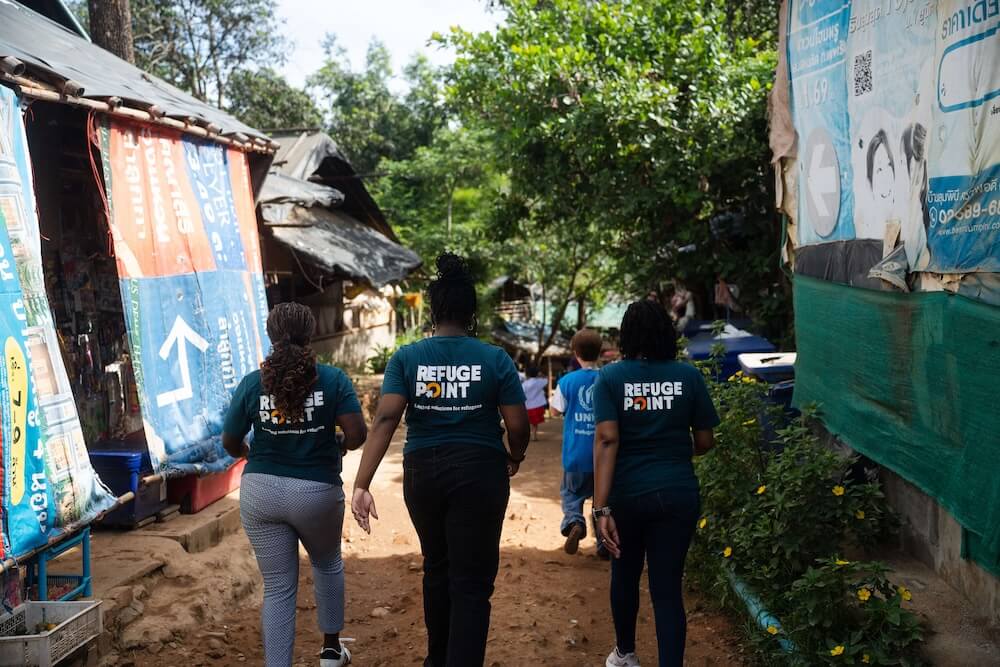
Three RefugePoint staff members at work inside Tham Hin Refugee Camp, Thailand. Photo: Chris Jensen, RefugePoint


2. We are leading networks that support our peers and the broader refugee response ecosystem

The refugee response sector has taken a major hit. Many agencies can’t operate as they once did. Peer support and the coordination of networks is crucial right now. We’re providing urgently needed coordination and support through the networks we lead, such as the Refugee Self-Reliance Initiative (RSRI) and the Global Family Reunification Network (FRUN), to ensure that institutional knowledge and momentum don’t slow down.
 

How we advanced this work in 2025:
  • We engaged in high-level meetings, like the Global Refugee Forum Progress Review in Geneva, to make sure that collective engagements, including pledges and work with the UN Refugee Agency (UNHCR), continued moving forward.
  • We continued to expand the Refugee Self-Reliance Initiative’s network, with the RSRI Community of Practice expanding from 390 organizations in Q1 to 630 by the end of Q3.


How we will continue to move this forward in 2026:
  • We are leading networks that support our peers and the broader refugee response ecosystem—whether by connecting them with funders or by supporting their efforts to advance our shared agenda.
  • Through the Refugee Self-Reliance Initiative, we aim to expand engagement with members, grow the network and build new networks in Latin America and East Asia.
  • As we continue to staff the Secretariat of the Global Family Reunification Network (FRUN) and provide leadership as a member of the FRUN Advisory Group, we will work to strengthen global support for family reunification by cultivating transnational referral pathways, creating opportunities for members to connect through Community of Practice events, and convening an annual in-person FRUN conference. We will also provide support to advance progress among actors engaged in the Multistakeholder Pledge on Family Reunification and sustain platforms—such as a dedicated listserv—that will enable ongoing knowledge sharing, collaboration, and exchange across the network.


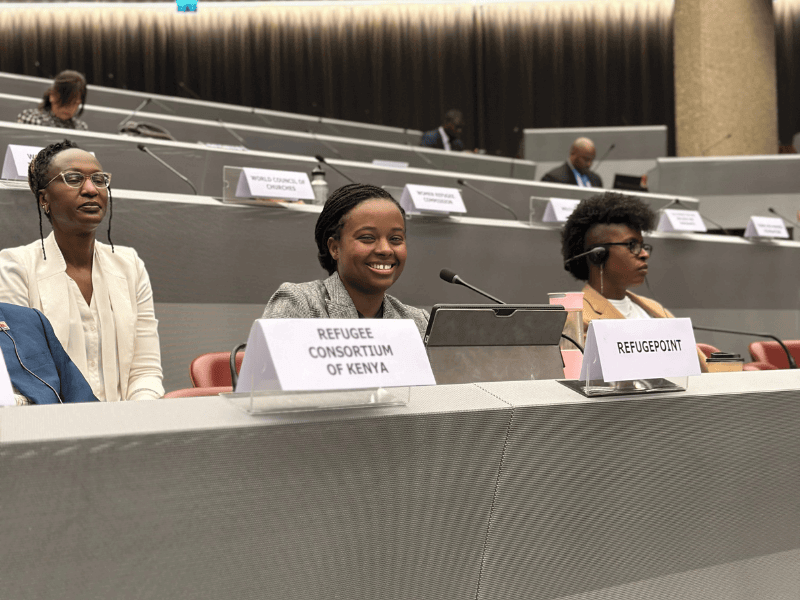
Bahati Maganjo, Technical Advisor, Refugee Leadership and Refugee-Centered Programming at RefugePoint, speaks on a panel entitled, “Meaningful refugee participation in practice: Scaling impact and shaping the path forward” at the 2025 Global Refugee Forum Progress Review in Geneva.


3. We are strengthening collaborations with refugee leaders and refugee-led organizations

As we shared in a recent blog, over the past several years, RefugePoint has been intentionally deepening its commitment to refugee-centeredness and refugee leadership. This commitment has pushed us to closely examine how our programs are shaped and implemented, how we choose our partners, and whose perspectives inform our decisions. Refugee-centeredness sits at the heart of our work—guiding us to collaborate with refugees as leaders and partners, and to ensure their priorities and expertise drive our strategies, programs, and systems-change efforts. As our partnerships with refugee leaders and refugee-led organizations continue to grow, we regularly reflect on how this value shows up in practice.

We intend to continue and deepen this work. Amid shifts in the international system, it’s essential that frontline actors serving their own communities continue to be resourced and invested in. They are a critical part of the response, so one of our continuing strategies is to intentionally support, build, strengthen, and channel funding to refugee-led organizations.

How we advanced this work in 2025:
  • We created permanent positions for RLO and diaspora-led org leaders on the Global Family Reunification Network (FRUN) Advisory Group, and an RLO and Diaspora Work Group within the FRUN. We had very strong RLO participation in the FRUN conference in Nairobi in November, including numerous RLO representatives funded by RefugePoint to participate.
  • In June, at the Consultations on Resettlement and Complementary Pathways (CRCP), the participation of speakers with lived experience of forced displacement was supported by RefugePoint and partner organizations.
  • In September, RefugePoint convened a roundtable to explore why women-led RLOs and Community Based Organizations (CBOs) in Nairobi, Kenya, are rarely represented at policymaking tables or successful in progressing beyond the early stages of funding and partnership processes, despite contributing significantly to their communities. The conversation offered a candid look at the conditions shaping women’s leadership in refugee communities, and helped develop practical ideas for change. In 2026, the learnings from this roundtable will be used to pilot a new capacity-strengthening initiative specifically designed for women RLO leaders.
    We supported three RLOs/CBOs with grants and involved 25 in our peer-to-peer learning cohort—nine of these for the first time.


How we will continue to move this forward in 2026:
  • In response to requests for support from RLOs operating in refugee camps in Kenya, we will expand our activities to the camps and will provide grants and support to strengthen the capacity of these organizations to provide impactful programming to their communities.
  • We will continue to support global refugee voice and governance through bodies such as the Global Taskforce on Labor Mobility’s Refugee Advisory Committee and use key global events to showcase RefugePoint’s refugee-centered model.
  • We will produce targeted learning products (including a refugee-centeredness blog, briefs, and reports) and engage in communities of practice to capture and share lessons on meaningful refugee participation.


Conclusion

Even amid widespread disruption, we remain guided by the vision that we have been pursuing: that every refugee deserves to have agency and control over their lives and a place to call home. That belief will continue to drive our work in 2026—now more urgently than ever.

Join Our Community

Stay in the know about our work with refugees: get refugee stories, events, RefugePoint news, and more delivered right to your inbox.

Subscribe to get refugee stories, events, RefugePoint news, and more delivered right to your inbox.

By subscribing you agree to with our Privacy Policy & provide consent to receive updates from Refuge Point.

Give hope by supporting refugees today

Your gift will be used to deliver lasting solutions for refugees around the world, and help them rebuild their lives in safety.
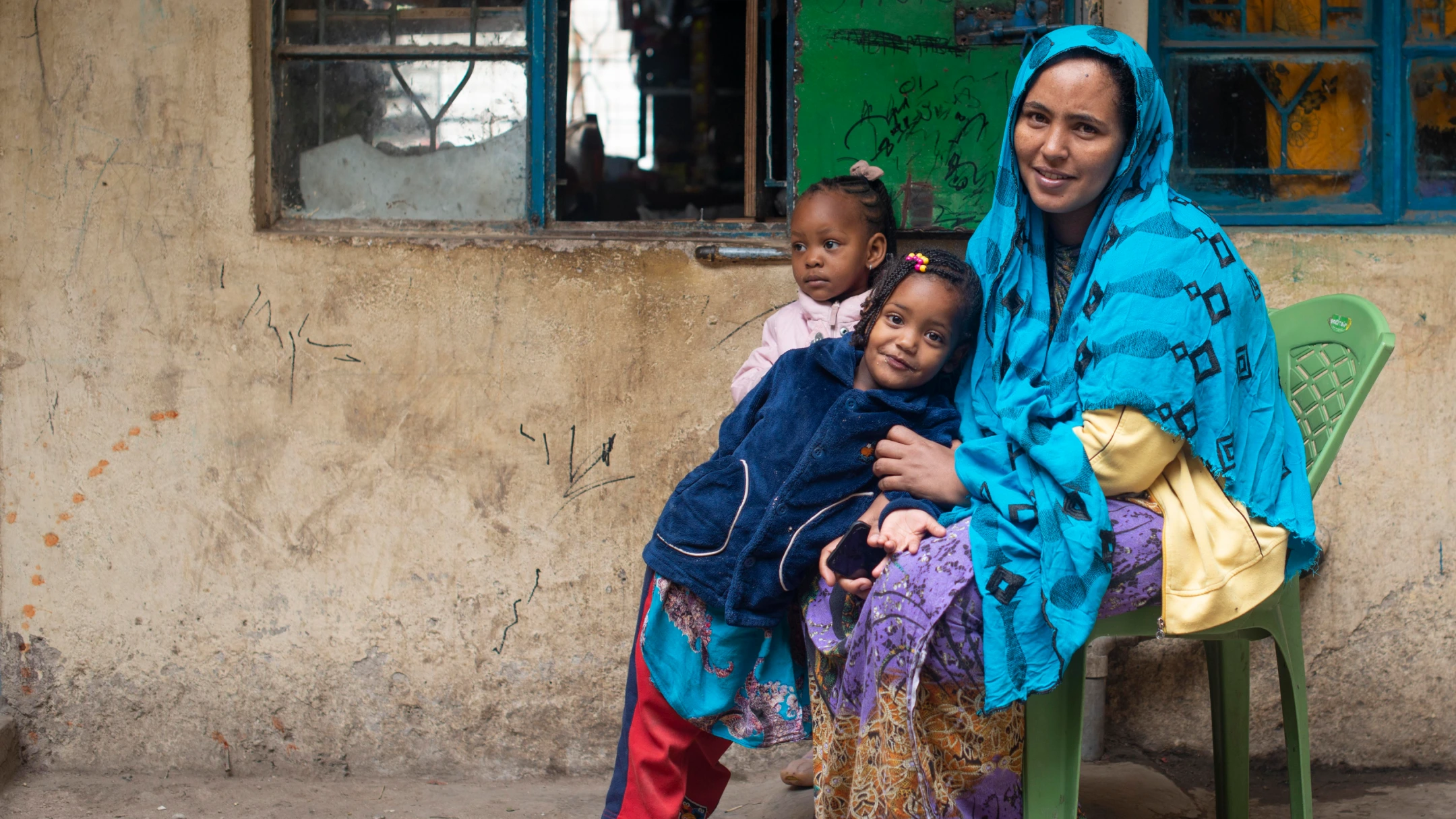
two children relaxing with woman

Join Our Community

Stay in the know about our work with refugees: get RefugePoint news, refugee stories, events, and more delivered right to your inbox.

This site is protected by reCAPTCHA and the Google Privacy Policy and Terms of Service apply.