/ Scaling Resettlement and Complementary Pathways Along West African Routes
Updates & Insights
Scaling Resettlement and Complementary Pathways Along West African Routes
All posts
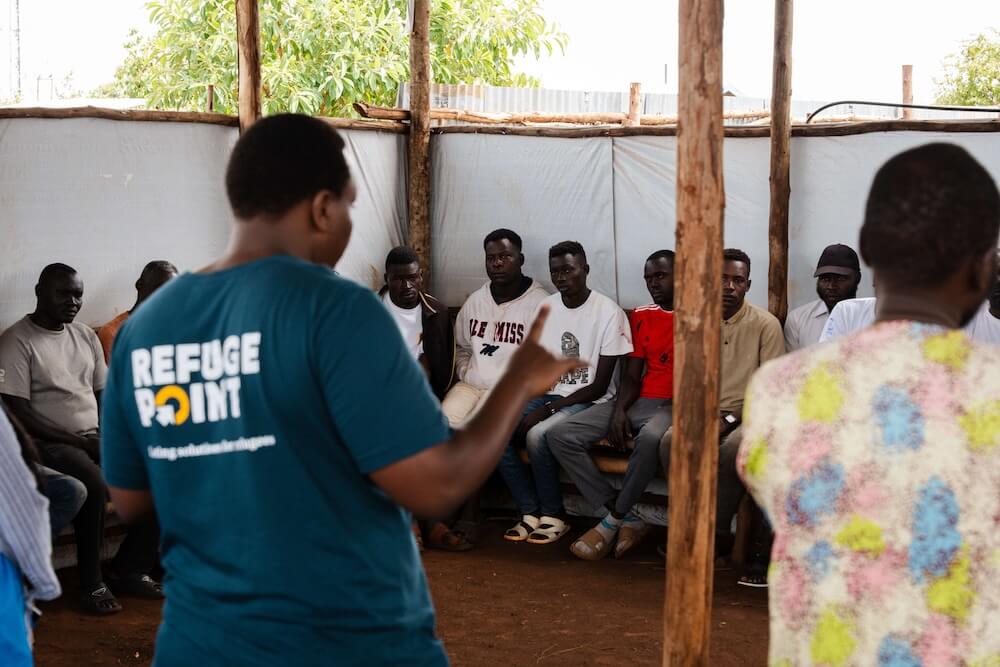
RefugePoint’s Resettlement Expert engaging with refugee youth and partners in Bamako, Mali at a training session focused on education pathways, digital skills, and safe, legal labor mobility opportunities as part of the Route-Based Approach.
Published on10 March 2026
By RefugePoint’s Complementary Pathways Expert based in Dakar, Senegal
In October, I spent a week in Bamako, Mali, supporting UNHCR’s efforts to scale up resettlement and complementary pathways under the Route-Based Approach (RBA). The RBA is a cross-border framework developed by UNHCR, the International Organization for Migration, and partners to respond to mixed movements of refugees and migrants along key displacement corridors. It focuses on reducing harm and expanding safe and legal alternatives to dangerous journeys.
Mali is a particularly complex and important context for this work. Situated at the crossroads of major mixed-migration routes toward North Africa and Europe, it is simultaneously a country of origin, transit, and asylum. Refugees from Burkina Faso and Niger seek safety in Mali, while many others face the risks of onward movement across the Sahara in search of protection and opportunity.
The mission focused on Pillar 5 of the Routes-Based Approach (RBA), which seeks to expand access to resettlement and complementary pathways such as education, employment, family reunification, and humanitarian corridors. At a time when traditional resettlement options are increasingly constrained, these pathways offer refugees meaningful opportunities to rebuild their lives with dignity while reducing reliance on irregular migration. This work aligns closely with RefugePoint’s commitment to expanding access to lasting solutions for refugees. Supporting UNHCR and partners to strengthen referral systems, build capacity, and explore education and labor mobility pathways reflects RefugePoint’s broader approach of combining direct services with systems-level change to create sustainable impact.
During the mission, I met with UNHCR colleagues, government counterparts, NGO partners, and diplomatic missions to identify opportunities to expand access to resettlement, education, and employment pathways. These conversations highlighted both the challenges and the real potential for new partnerships, particularly those related to digital skills training for higher education and labor mobility.
A highlight of the mission was a session with a refugee youth group in Bamako. The youth spoke about wanting to continue their education or find work, while facing barriers such as limited internet access, language constraints, and the scarcity of opportunities for Francophone refugees.
Ending the mission by listening directly to young refugees was grounding and energizing. It reminded me that complementary pathways are not abstract policy tools, but tangible lifelines that enable refugees to plan for a future with dignity, safety, and hope.
RefugePoint envisions an inclusive world where all refugees can safely build stable, connected, and thriving lives. Our Theory of Change (ToC) shows how we’re turning that vision into action. The...
Over the past year, the world has shifted in ways that have made life far more dangerous and uncertain for refugees. Support systems that once offered stability are eroding: global...
This week marks the 2025 Global Refugee Forum Progress Review in Geneva, Switzerland: a time for the international community to take stock of our progress on the pledges that we...
Join Our Community
Stay in the know about our work with refugees: get refugee stories, events, RefugePoint news, and more delivered right to your inbox.
Subscribe to get refugee stories, events, RefugePoint news, and more delivered right to your inbox.
By subscribing you agree to with our Privacy Policy & provide consent to receive updates from Refuge Point.
Give hope by supporting refugees today
Your gift will be used to deliver lasting solutions for refugees around the world, and help them rebuild their lives in safety.