/ Blog / NGO Resettlement Referrals: Learnings from the Equitable Resettlement Access Consortium (ERAC)
Impact
NGO Resettlement Referrals: Learnings from the Equitable Resettlement Access Consortium (ERAC)
All posts
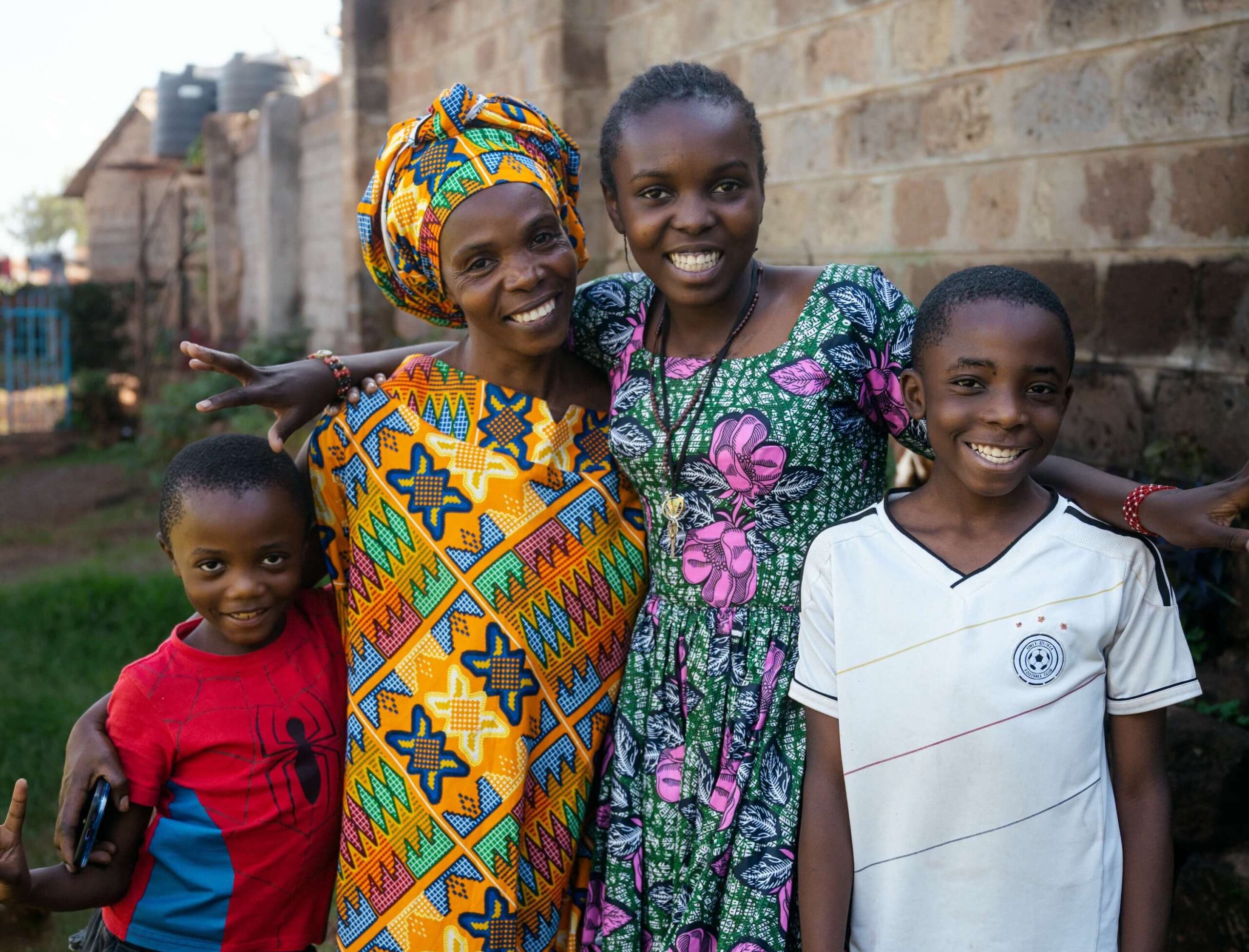
Kavira and her family outside their home in Nairobi. Photo: Chris Jensen, RefugePoint
Published on10 June 2026
By Hannah Bensusan, RefugePoint
Refugee resettlement has long been a hallmark of both U.S. and global policy, and a major part of RefugePoint’s work. The process can be lengthy, particularly for the United States—before even boarding a flight to the U.S., refugees must undergo multiple screenings, including being identified initially to begin the process, background checks, interviews, medical checks, and cultural orientation. These mandatory processes must all take place in countries where refugees live, or at least be geographically close enough for refugees to access. The U.S. has long partnered with refugee-serving organizations like the UN Refugee Agency (UNHCR) to carry out some of these screenings, and with much success: between 2005 and 2020, more than 800,000 refugees were successfully admitted to the U.S., with many of these cases supported by RefugePoint. Directly or indirectly, RefugePoint has contributed to almost 17% of all resettlement referrals worldwide since our founding.
One of the most meaningful aspects of working in resettlement is knowing that, for some, it represents the possibility of finally ending years—sometimes decades—of uncertainty and displacement. Resettlement offers more than relocation; it offers permanence, safety, a legal status beyond refugee status, and the opportunity to rebuild a life.
A newly resettled family stands outside their home in the US, marking the beginning of a new chapter. Photo: IRAP.
An Optimistic Time for U.S. Refugee Resettlement
In 2023 and 2024, the Biden Administration authorized the admission of up to 125,000 refugees, signaling a renewed political commitment to providing pathways to safety for people forced to flee their homes. At the same time, the U.S. formally opened the door wider for trusted NGO partners to submit resettlement cases directly to the U.S. Refugee Admissions Program (USRAP).
The Equitable Resettlement Access Consortium (ERAC) is Formed
At the end of 2022, the Equitable Resettlement Access Consortium (ERAC) was formed by HIAS, the International Refugee Assistance Project (IRAP), and RefugePoint. ERAC was one of the initiatives selected to help test and operationalize the Biden Administration’s vision to enable trusted NGO partners to directly submit resettlement cases to the USRAP with funding and technical assistance from the Department of State’s Bureau of Population, Refugees, and Migration (PRM). ERAC actively submitted resettlement cases between November 2022 and January 2025, when the USRAP was abruptly suspended.
Partners participate in an ERAC resettlement training session in Nairobi, Kenya. Photo: RefugePoint
Why “Equitable Access” to Resettlement?
I joined RefugePoint as the NGO Referrals Program Manager in January 2023, just as ERAC began the challenging yet exciting work of building a shared framework for NGO-led resettlement referrals. Our task was ambitious: to demonstrate that NGOs could help expand access to resettlement by identifying refugees with strong resettlement needs and preparing and submitting their cases to the USRAP. The concept of ‘equitable access’ is something that RefugePoint has long pushed for—that is, not just increasing numbers, but widening access for at-risk refugees who are currently missed by the existing resettlement architecture. Further, by increasing and diversifying access points to resettlement, ERAC contributed to ensuring that available USRAP resettlement slots were fully utilized.
The model that was ultimately developed and rolled out with NGO partners was grounded in decades of collective experience in NGO resettlement referrals across the three ERAC members. It was shaped by the realities and expertise of our local partners and collaborators, and informed by global standards on resettlement, integrity, and safeguarding. At its core was a commitment to ensuring that NGO resettlement referrals complemented, rather than duplicated or supplanted, the resettlement efforts of other key actors, such as UNHCR. At the time, the idea that NGO referrals could meaningfully expand equitable access to resettlement felt important. Today, in the face of shrinking resettlement opportunities globally and devastating funding cuts across the refugee protection sector that have left refugee communities with fewer resources and greater needs, the need for an effective, collaborative resettlement system is even more urgent.
During ERAC’s partnership with PRM from October 2022 to January 2025, the Consortium and its network of partners identified 2,614 individuals for resettlement and submitted 1,282 individuals to the USRAP from South West Asia and North Africa (Lebanon, Jordan, Egypt), Sub-Saharan Africa (Nigeria, Kenya), Europe (Greece, Romania, Poland), and Latin America and the Carribean (Aruba, Guyana, Peru, Panama, and Colombia). Many of these represented individuals who had previously been unable to access resettlement.
Despite the program’s premature end, ERAC expanded its network of NGO partnerships, introduced resettlement programming in locations where it had not previously existed, and demonstrated that NGO-led resettlement referral operations can be implemented with integrity across diverse geographies.
Staff from the Centre for Victims of Torture engage in an ERAC partner training session in Nairobi, Kenya. Photo: RefugePoint
Impact: How ERAC Reached New Refugee Populations
A deeply rewarding part of working with ERAC was the network of partnerships we were building along the way. During two years of implementation, ERAC formalized 13 partnerships with local NGOs and refugee-led organizations (RLOs) and was in the process of establishing five more when PRM funding was terminated. Many of these organizations had never been directly engaged in resettlement programming, yet this experience reinforced what many working in the refugee protection space already know: local NGOs and RLOs are often closest to the realities that forcibly displaced communities face every day. They are frequently the first point of contact for people navigating insecurity, legal limbo, discrimination, or barriers to accessing rights and services. They also have a strong contextual understanding of the environments they work in, and are well-positioned to identify people facing acute protection risks in the communities they serve—including women and girls at risk, LGBTQIA+ individuals facing extreme vulnerabilities, survivors of violence and torture, and those with urgent medical needs.
By January 2025, RefugePoint had established partnerships with NGOs in Kenya and Nigeria and was in the process of doing the same in the Central African Republic. These partnerships were built on shared values of trust, collaboration, and mutual learning. While some of these partnerships were not in place for as long as originally envisioned due to the end of PRM funding, we are grateful to our NGO partners for their contributions and commitment to expanding access to resettlement through NGO referrals. We hope to resume this important work together in the future.
Conclusion
ERAC’s experience demonstrated that NGOs possess (or can build) the technical capacity and integrity measures necessary to identify refugees for resettlement and, in many contexts, submit high-quality cases directly to resettlement states. But perhaps more importantly, ERAC showed that expanding NGO engagement in resettlement can both increase the number of refugees submitted for resettlement and make access to resettlement more equitable, inclusive, and responsive to the realities refugees face.
By Shelby Quackenbush (Refugee Self-Reliance Initiative), Sofia Casas and Peter Ventevogel (UNHCR), and Anna Nicol (RefugePoint), on behalf of the full team of White Paper authors, including Awa Ahmed Haji...
With refugee resettlement opportunities at their lowest level in decades, it is all the more important to consider how those coveted quotas are allocated across regions and countries. The strategic...
Read Transforming Refugee Response: Vol. 9, Shifting Systems to Open and Expand Labor Mobility for Refugees Chol fled to Kenya at the age of 14 after conflict forced him...
Give Hope: Support Refugees Today
Make a gift to deliver lasting solutions for refugees and help them to build new lives.
Join our Community
Subscribe to get refugee stories, events, RefugePoint news, and more delivered right to your inbox.
By subscribing you agree to with our Privacy Policy & provide consent to receive updates from Refuge Point.
Give hope by supporting refugees today
Your gift will be used to deliver lasting solutions for refugees around the world, and help them rebuild their lives in safety.